vendredi 16 décembre 2016

Ili : le petit appareil qui promet de briser les barrières linguistiques

Lotfi Nafi


       L’année 2017 pourrait bien être l’année où l’on surmontera les premières barrières de la langue. Et c’est l’entreprise japonaise Logbar qui semble être à la pointe dans le domaine. En effet, lors du dernier CES 2016 ( Consumer Electronics Show 2016 ) la firme nippone a présenté son prototype : Ili. Ili est le premier traducteur instantané, vocal et portable. L’efficacité d’Ili lui a permis de se démarquer lors de ce CES et le produit semble très prometteur.

Le produit est principalement dédié aux voyageurs et touristes. C’est un petit appareil qui se porte comme un pendentif, et qui par simple pression sur un bouton, enregistre votre voix, traduis dans la langue souhaitée puis parle grâce à un système de haut-parleur. La firme souhaiterait établir des partenariats avec des hôtels ou des agences de voyages japonaises. La première version du produit permet de naviguer entre japonais, anglais et chinois. Mais la firme a déjà annoncé la venue du français, thaïlandais, coréen, espagnol, italien et l’arabe lors des prochaines mises à jour.

Les promesses d’un tel produit sont nombreuses. Ili pourrait permettre de favoriser grandement les échanges touristiques en limitant l’impact de la barrière de la langue. La firme prétend en finir avec les lacunes linguistiques de ses utilisateurs. De plus, le produit ne nécessite pas de connexion internet afin de fonctionner. L’ensemble de ses données d’utilisations est stockés ce qui l’avantage d’un point de vue de son efficacité et de son autonomie. Cependant, il est évident que le produit ne permet pas encore de mener des conversations trop complexes sur un sujet trop pointu.

Grand vainqueur du prix de l’innovation lors du CES 2016, Ili paraît être un gadget indispensable à tous les voyageurs dans les années à venir. L’entreprise lance le service de prêt dans des principaux aéroports japonais dès le printemps prochain. Quant au prix, il est estimé pour l’instant, à 300$. Le filon ainsi créé n’est pas ignoré par les géants de l’électronique japonaise puisque Panasonic, 3 mois avant le début du CES 2016, a dévoilé le premier mégaphone traducteur instantanée. Sa mise en service au sein de l’aéroport de Narita, en banlieue de Tokyo, a rencontré un grand succès.


Sources :


mardi 13 décembre 2016

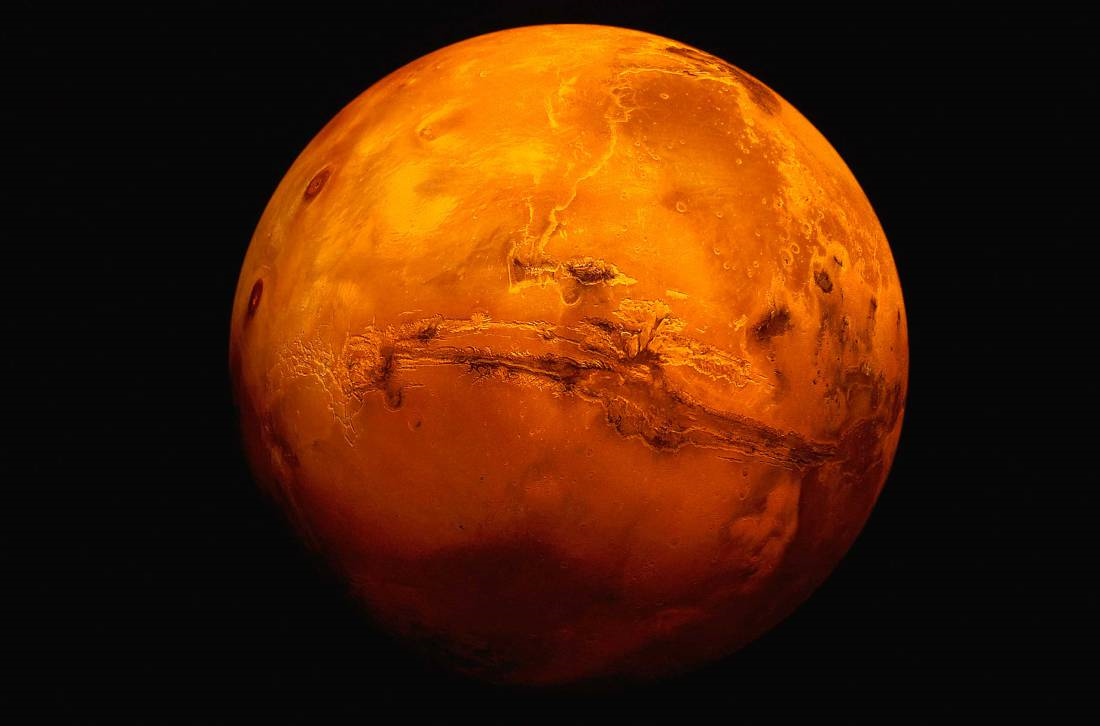
 Will humans soon walk on Mars?


Baptiste Lawniczek & Alexandre Enaudeau


     The ExoMars team, a European mission, was about to land its Schiaparelli module on the Red planet on Wednesday, October 19th 2016. It was designed to measure the magnetic field on Mars for the first time. Moreover, by studying the gas composition of its atmosphere thanks to the Trace Gas Orbiter probe, they could prove that there is life on Mars. Indeed, the discovery of methane could be an indicator of a micro-organism activity.

       Europe wants to prove its capacity to land a rover on Martian soil. Indeed, the European Spacial Agency landed the Huygens module on Titan, one of Saturn’s moons, in 2005 and realized a world premiere by sending the Philae robot to a comet called Tchourioumov-Guérassimenko. The ExoMars mission’s success would be a demonstration of technological competency. But it would also bring new information that could allow humans to find solutions to make life on Mars possible.

       In fact, the race is on to land a human on Mars. During the 67th international congress of astronautics in Mexico, Elon Musk announced plans for his company SpaceX to send people to the Red Planet by 2024. According to him, even if the price would be close to billions of dollars to go to Mars with current technology, he could reduce it to 100.000 dollars. That’s why Elon Musk is clear about the idea of coming back : ‘The people that we send there are going on a mission forever, for the rest of their lives. That is really what makes this project possible’ he said. His goal is to create a permanent colony on the Red Planet thanks to a transport module that could carry hundreds of people.

       But they are not the only ones in contention. Dutch organization Mars One also has the ambitious plan to set up a long-term Mars colony. Strangely, the terms and conditions of the trip have not topped tens of thousands of people applying for a place on board. Members of the public have already been selected for the voyage. Only four will be chosen for the first trip. On the Red Planet, the colony will be self-sufficient to avoid needing to be resupplied from Earth. They will feed themselves from their production of food, extract water from the soil and regenerate their atmosphere with the same plants they are growing.


       Given what is at stake, it will be a huge asset for the organization which first succeeds in landing a man on Mars and establishing a colony. But some matters still need to be solved before the great departure. Indeed, according to the latest news, the ExoMars Schiaparelli lander has crashed because of a computer glitch.


The end of planned obsolescence, a dream or a trend ?

The end of planned obsolescence, a dream or a trend ?

When did you last change your phone? Three years is the average duration of ownership of an iPhone according to Apple. It is even shorter for other phones at only two years. Full memory or dead battery, our devices are no longer future-proofed. Despite their high cost, they don’t last all that long. You may think it’s just wear and tear but these failures are too premature and yet, most of the time, people are far from thinking that it was premeditated. For instance Apple would regularly innovates in order to maintain control over their products’ life span:  uploading the latest operating system for older devices became impossible and replacing the battery or the screen yourself is becoming harder and harder. They also make the accessories obsolete so that the customers are being forced to replace them between each generation. Today, customers are increasingly being targeted through planned obsolescence, and this is becoming obvious to them. Planned Obsolescence has become a real scourge of modern times.

In fact there’s nothing new about this. Many theories about consumption emerged in the 30’s including Bernard London’s which stipulates that keeping products until the end of their natural life cycle was slowing down the economy. Two decades later, former American President Eisenhower followed in London’s footsteps declaring “to save the economy, we must buy, buy anything”. In the 60’s, Vance Packard set the cat among the pigeons revealing that some firms were secretly limiting the durability of devices in order to shorten their lifespan and so boost profits.

Customers became better informed and many disgruntled buyers dared to sue companies. For instance battery life in three generations of iPods was limited to 18 months, which infuriated many customers. Quickly enough, Apple reimbursed them. Indeed, they prefered slamming down the Pandora box rather than losing the case and so setting a precedent. In France in 2015 a bill was passed to fight against planned obsolescence and the risk run is 2 years’ imprisonment as well as a fine of 300 000€. Not only is planned obsolescence hard to prove, fines and penal servitude haven’t been enough to scare firms. What is really at the core of their concerns is their image. Today, being eco-friendly is trendy.

Firms now have to make their strategy evolve to attract customers and to change their economic model. Some companies have opted to develop customers’ loyalty with replaceable and repairable parts. In fact, even if consumers don’t buy new products, this economic model is viable because companies earn money from the spare parts and retain their customers. For instance SEB, a world leader in small electrical appliances, promotes its products by promising to stock parts for them for ten years. Fairphone is also a precursor of this new trend and a proof that the demand is real for such an economic model. Indeed in this case, consumers themselves believed in the modular telephone and financed it thanks to crowdfunding. For the Earth's sake, it would be a great economic step forward if it gains ground.

 Claire Peters & Jeanne Schied

dimanche 11 décembre 2016

De la vie sur Mars ? La planète rouge enfouit ses secrets.

De la vie sur Mars ? La planète rouge enfouit ses secrets.


La surface de Mars est pratiquement dépourvue d’eau, la plupart de ses régions étant plus sèches que les plus arides déserts terrestres. Or l’eau est un prérequis à toute forme de vie. Si la vie existe sur Mars, elle est donc enfouie sous le sol. Pour la trouver, il faudra creuser. Et creuser, c’est bien ce que prévoit le projet ExoMars dans lequel L’Agence Spatiale Européenne (ASE) et l’Entreprise d’Etat pour les activités spatiales russes (Roscosmos) ont combiné leurs forces.


Depuis le 19 octobre pourtant, la communauté scientifique s’inquiète. Elle a perdu tout contact avec la sonde Schiaparelli qui a touché ce jour-là le sol martien. Or l’atterrissage de cette sonde constituait le premier volet de la mission ExoMars. Le 16 octobre, la sonde de 600kg s’est détachée sans accrocs du vaisseau-mère ExoMars Trace Gas Orbiter (TGO). Trois jours plus tard, comme prévu, elle a franchi l’atmosphère de Mars, protégée des quelques milliers de degrés Celsius par un bouclier thermique. Puis un parachute supersonique s’est déployé pour la faire ralentir, secondé par 9 rétropropulseurs. Sauf que ces derniers n’ont visiblement pas fonctionné assez longtemps car la sonde a percuté le sol à plus de 300km/h, l’impact créant un cratère de 50 cm de profondeur.

Toute communication avec Schiaparelli a alors été perdue, au grand dam des scientifiques, qui prévoyaient de l’utiliser pour collecter diverses données climatiques et géomagnétiques sur la planète.

La situation n’est cependant pas si dramatique. L’atterrissage de Schiaparelli était essentiellement un test, destiné à affiner tous les paramètres d’entrée et d’atterrissage dans l’atmosphère de Mars dans l’objectif d’envoyer en 2020 un rover sur la planète, qui lui sera à même de forer le sol. Et avant la coupure de communication, toutes les données de vol de Schiaparelli ont bien été récupérées par les équipes opérant la mission. De plus, la sonde a heurté la surface de la planète pile dans la zone prévue, Meridiani Planum, située proche de l’équateur martien. Simplement, un atterrissage en douceur plutôt qu’une collision brutale était attendu.

Dans le cas où tout se serait passé comme prévu, la sonde, équipée d’une batterie non rechargeable, n’aurait de toute manière pu rester active que 2 ou 3 jours. Ce à quoi s’attellent à présent les scientifiques, c’est à cerner les causes de l’atterrissage manqué pour que le rover de 2020 ne connaisse pas le même destin. De surcroît, il est un versant du projet qui s’est déroulé sans heurts. Le vaisseau-mère s’est bien placé en orbite autour de Mars, et pourra étudier les niveaux de méthane dans l’atmosphère. Ces derniers contribueront à déterminer l’existence ou non d’une vie microbienne sur la planète. Le point crucial de la mission est bien entendu de permettre au rover de prélever des échantillons de sol pour tenter d’y trouver de la matière organique qui témoignerait d’une présence de vie. Cet enjeu nécessite néanmoins un grand investissement.

L’atterrissage de Schiaparelli aura en effet un impact financier, la mission souffrant actuellement d’un déficit de financement de près de 300 millions d’euros. Jan Woerner, le directeur général de l’Agence spatiale européenne, espère que les ministres des Etats membres - à qui il a été demandé de couvrir les déficits de la mission – ne se désengageront pas au vu de la collision finale de la sonde. “Nous allons montrer que la mission est un succès” a-t-il déclaré à la presse, “nous n’avons pas à les convaincre, il nous faut le leur montrer, les résultats sont criants”. La 4ème planète du système solaire nous dévoilera ainsi peut-être de nouveaux fragments de ses mystères en 2020.


Marine Duvivier-Bouclet & Chloé Tournier,


Mots-clés :

Mars
ExoMars
Schiaparelli
Exploration
Espace
Sonde


Links


2016年诺贝尔化学奖揭晓

2016诺贝尔化学奖

DONG Xiaolong
MANIGLIO Rosanna
BAI Weiming


105日下午, 2016诺贝尔化学奖自法、美、荷的三位科Jean-Pierre Sauvage, J. Fraser StoddartBernard L. Feringa获奖. 诺贝协会将诺贝尔化学奖800万瑞典克朗颁发给以上三位科家以奖励其在分子机器的设计和合成取得的研究成果


斯特拉斯堡大Jean-Pierre Sauvage是第九个荣获诺贝尔化学奖的法人,同也是校第四位诺贝尔化学奖授。他的导师Jean-Marie Lehn1987年也曾过诺贝尔化学奖

Sauvage授于1983实现了合成分子机器的第一步,他成功地将两个环状分子通特殊的链连接在一起,即双环化合物。 正常情下,分子是通原子共用形成的共价键组成的,而在条链中,分子是由更加自由的机械性相互作用形成的。如果我分子机器能自主地完成任,那么组成分子机器的部件必,而上述两个环状分子正可以实现这一功能。

1991年,Stoddart爵士成功合成出了轮烷实现了合成“分子机器”的第二步。轮烷是一由一个环状分子套在一个哑铃状线型分子上而形成的内锁型超分子体系。在此基上,Stoddart爵士又分子机器设计出了一系列新的“部件”。

Feringa授是首个研发分子马达的科1999年,他成功地合成了一朝一方向持的分子子叶片。利用分子马达,他成功马达本身大上10000倍的玻璃始旋。此外,他也成功地设计出了一辆纳米小

今年的三位获奖者打破了分子系的平衡局面,其注入能量,而使分子的运动具有可控性。从历展的角度看,分子马达1930年代的电动机有着曲同工之妙, 当时的科利用了电动马达展示了各的旋机械,却料想到电车、洗衣机、空以及食品加工机的普及。今天,分子机器很有可能在新材料、 器以及能系研发中得到与应用。


lundi 7 novembre 2016

What do you call chicken that isn’t chicken? SuperMeat!

What do you call chicken that isn’t chicken? SuperMeat!

Victor LAFONT and Rosanna MANIGLIO


     Eating meat is not environmentally sustainable: according to researchers all over the world. Now an Israeli startup wants to sell you artificial chicken meat. Are you ready?

     Strong demographic growth around the world is leading to increased meat consumption. More and more natural resources such as water, land and grain are being drained to support and feed livestock. Today 70% of all farmland is dedicated to livestock and its food. Moreover, nearly half of the world’s grain production is used to feed livestock and not humans, even though an animal consumes much more food than it produces. In fact, we could feed more people with a cow’s food than with its meat. Today, raising  livestock is an absurd and counterproductive system.

     One of the environmental issues of the 21st century is to find solutions to eat differently. One important trend of the past several years is veganism: not eating any animal products, including meat, milk, or eggs. But not everyone is ready to become vegan. Now the Israeli startup “SuperMeat”, claims to have found another solution and intends to revolutionize the food industry. It has developed a new technique to produce artificial meat grown in a laboratory instead of on an animal.

     Experiments on cultured meat had already been conducted some years ago, with beefsteak made from stem cells, but the meat produced was not convincing, and making a single steak cost around 250,000 € per portion.
Thanks to a new process, starting from chicken cells (see Protocol), SuperMeat has managed to produce small quantities of artificial chicken meat, which it claims has “a taste and appearance similar to a real piece of meat”, at a cost under 5 €/kg.


    SuperMeat promises us a better life with their “environmentally friendly” industry which would  require 99% less land, 90% less water and create 90% less greenhouse gas emissions.
It invites us to “join the revolution” and “make history” by contributing to the financing of its industry. The startup needs at least $500,000 to develop a full-scale prototype, and the final device will probably cost $2.5 million. Meanwhile, the firm already plans to provide supermarkets, restaurants and even  households with meat-production equipment by 2021.

     SuperMeat’s solution seems to be a good alternative to raising livestock: it’s green, ethical, inexpensive and can be set up quickly. But, when you think about it, doesn’t SuperMeat represent a threat to our consumer society? If SuperMeat becomes a monopoly -- the only firm offering meat -- it will be feeding most of humanity. So it will have total control of the meat market and could decide to significantly raise prices, speculate on natural resources, or ruin companies who produce meat in a traditional way. What appears to be an effective solution to a crucial environmental issue could create some serious societal and economic problems.

     Perhaps SuperMeat’s solution is too extreme. Why not return to a more eco-friendly way of production? After all, it might be more appetizing.